By: Captain Christina Bramlett, FLSE /PIO /Firemedic
Summer is in full swing, and the heat and humidity are vicious! Hard to believe it really wasn’t that long ago that we were all freezing and wondering when winter was going to make its exit.
In dealing with the summer sun, we all need to adequately hydrate and be able to cool in order to help our bodies compensate.
Some important tips to stay hydrated and help your body compensate for extreme environments:
- Drink ½ oz to 1 oz of water for every pound of body weight for daily water consumption.
- Snack on foods with 90% or higher water contents. (Examples: cucumbers, celery, tomatoes, radishes, peppers, cauliflower, watermelon, spinach, strawberries, broccoli, and grapefruit.)
- Room temperature water is better for your metabolism.
- Cold water is better for lowering body temperature.
- Avoid beer, definitely liquor, sodas (yes, diet ones too), and caffeinated beverages.
- Your urine is the gauge. If it’s clear, pale or straw-colored, it’s OK. If it’s darker than that, keep drinking.
For outdoor exercise or strenuous activities:
- Drink 17-20 oz. two to three hours before you exercise.
- Drink 8 oz. 20-30 minutes before you exercise.
- Drink 7-10 oz. every 10-20 minutes during exercise.
- Drink 8 oz. no more than 30 minutes after exercise.
While our children and the elderly are most susceptible to extreme heat and humidity, in all reality, no one is immune.
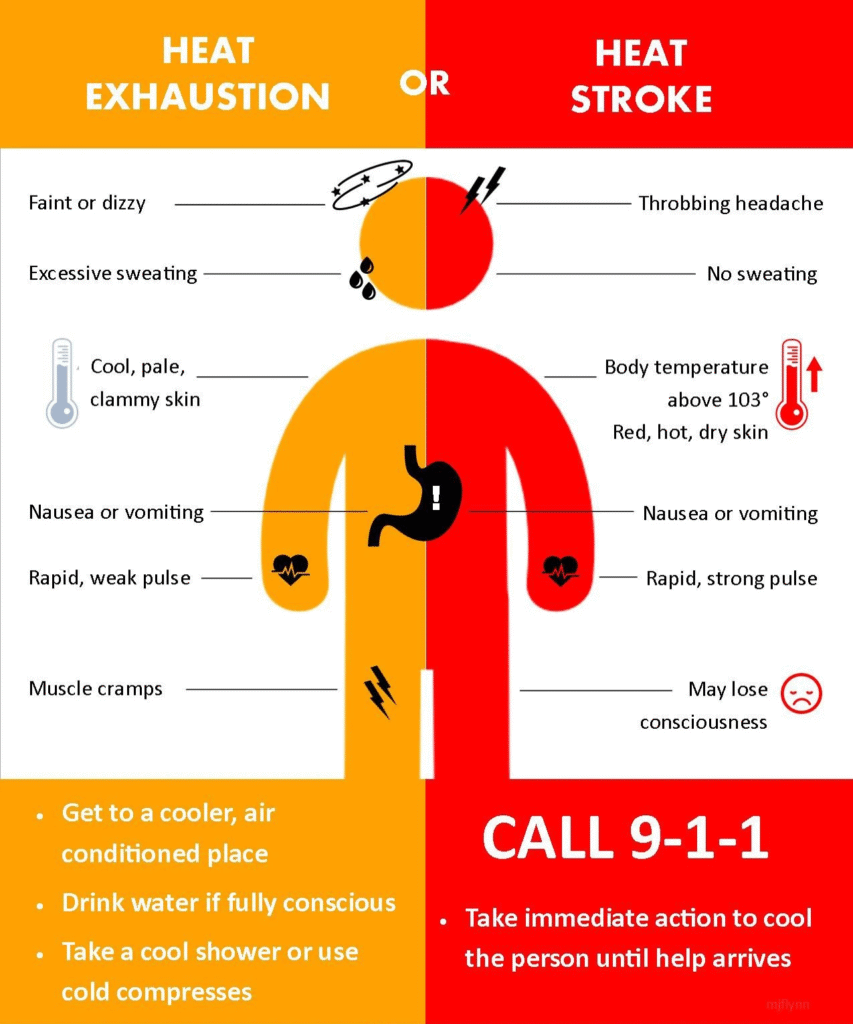
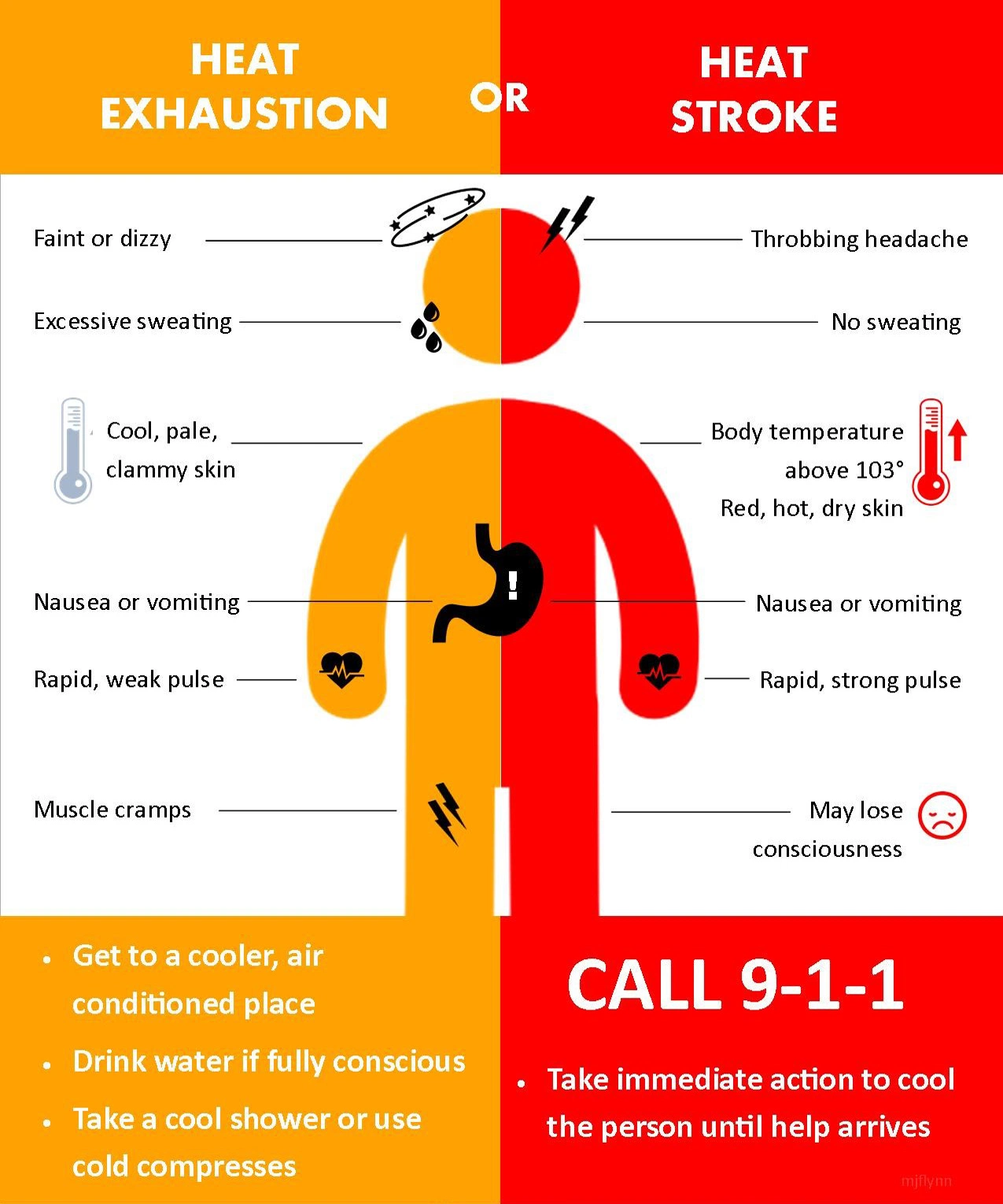
If you or a loved one works outdoors, it is vitally important that rest breaks from the heat and suffocating humidity are implemented and that you know what heat exhaustion and heat stroke looks like.
See our infographic on the signs and symptoms of these potentially life-threatening conditions.
Dehydration can lead to heart dysrhythmias, muscle cramping, exhaustion, headaches, blurry vision, and confusion. Keep the water handy and keep it flowing. It’s hot out there! Keep the shady spots handy or access to air-conditioned rest areas.
Enjoy the outdoors Monroe County, but stay safe!