By Captain Christina Bramlett, Fire/Life Safety Educator

These technological marvels are everyday conveniences, but they require extra attention to keep their pros from becoming cons.
Lithium-ion batteries are rechargeable powerhouses. They are the go-to for manufacturers because of their high energy density, meaning lots of power in a small amount of space. Unlike traditional batteries, they support recharge cycles, and as they have improved over the past 40+ years they can now be recharged hundreds of times.
In an age where portability and convenience are key, lithium-ion batteries dominate nearly all portable electronics. They are lighter and thinner than traditional batteries, can be recharged quicker, and while the initial cost is higher to make a lithium-ion battery, the value comes in little to no replacement costs.
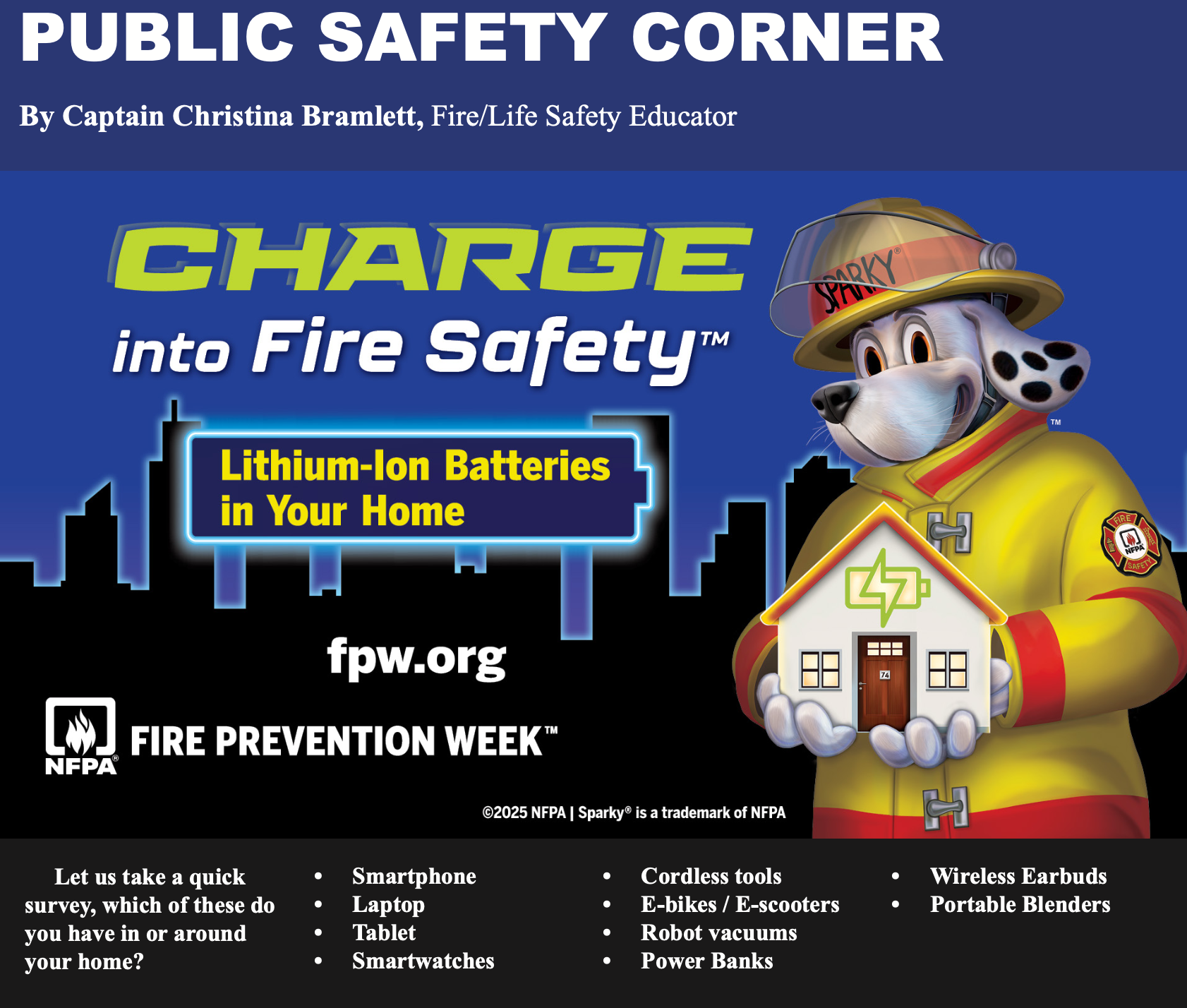
So why the focus on Lithium-ion batteries for Fire Prevention Week 2025?
Our communities are having increasing fires, injuries, and deaths from these batteries, either through improper storage, improper charging, or improper disposal after damage. The dramatic increase in apartment fires in
dense populations has prompted many districts to ban them from apartments. With so many copycat manufacturers of everyday products, which produce these items without standards, being diligent with what you are buying and who you are buying from is especially important.
Products that have not been certified from an independent testing laboratory like UL (Underwriters Laboratory), CSA Group, ETL (Intertek), and others market their products that may look just like their competitors but hidden within, danger is lurking. The same goes for charging cords. Who hasn’t grabbed a generic cord from a store because you forgot it at home or the office? That generic cord may be under or, worse yet, overcharging your device.
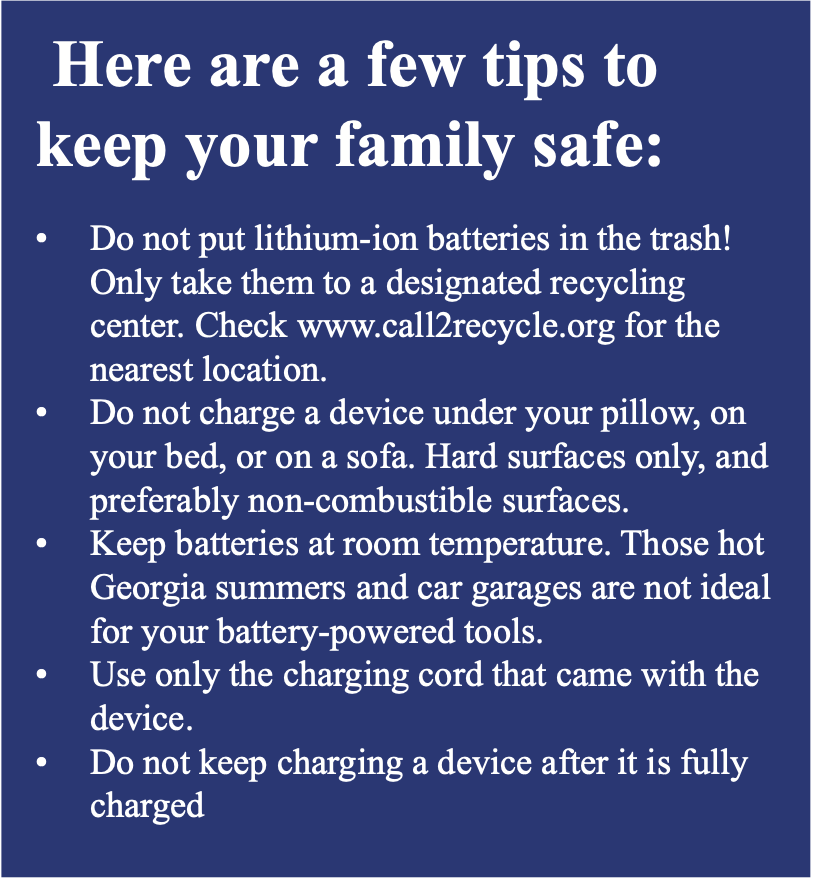
Dropped your phone lately? When dropped or damaged, the lithium-ion battery is especially vulnerable to a special fire scenario we call thermal runaway. These are violent, super-heated fires that combust with little to no warning. Immediately STOP using and remove from the area any battery that has: an odor, change in color, too much heat, change in shape, leaking, or is making odd or hissing noises.